


Does Vape Juice Expire? E-Liquid Shelf Life and Safe-Use Checks for the UAE

Does Vape Juice Expire? E-Liquid Shelf Life and Safe-Use Checks for the UAE
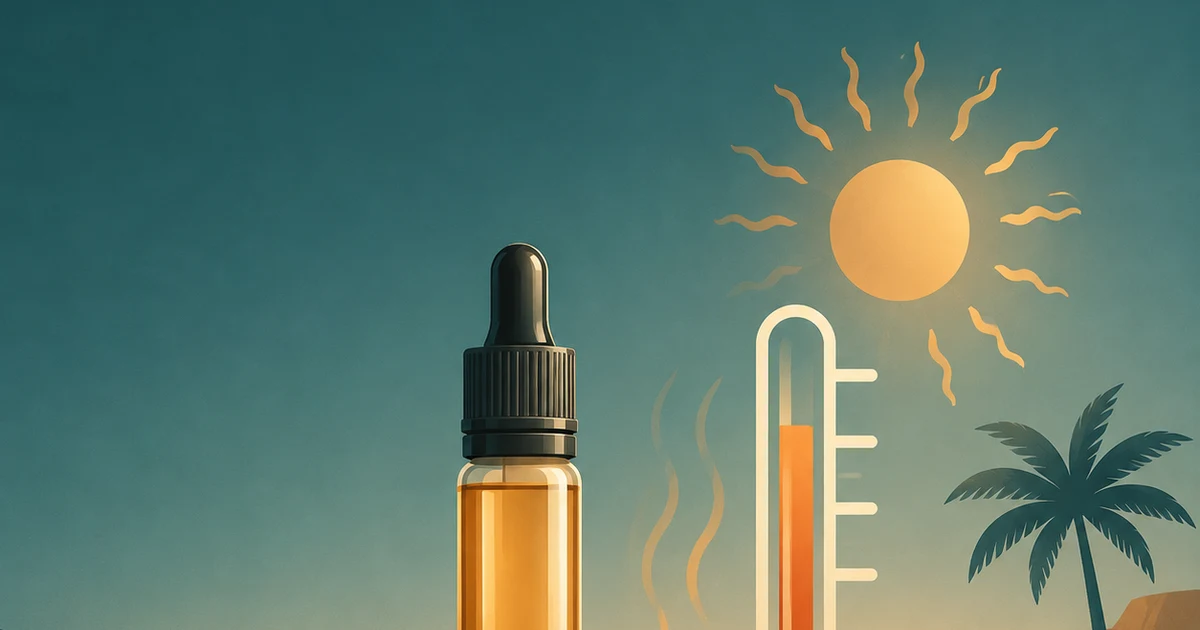
Short answer: yes, e-liquid is a dated product, but the date is a quality estimate rather than a hazard switch. Most bottled e-liquids carry a typical shelf life of roughly one to two years per the brand’s own guidance, and past that date the maker no longer guarantees the same quality assuming correct storage. In the UAE, heat is part of that calculation, because where and how the bottle is kept matters more than the calendar. This guide gives you a repeatable five-signal check, an honest account of what the printed date does and does not promise, and what the UAE’s climate means for your bottles.
What the Date on the Bottle Actually Means
Take the example of the brand behind one of the bottled juices stocked in the UAE: Nasty Juice publishes guidance that most of its e-liquids carry a typical shelf life of roughly one to two years. The point of the date is not that the liquid turns toxic the day after — it is that, past the date, the maker no longer guarantees the same quality, and that guarantee assumes the bottle was stored correctly. So read the date as an estimate, not a switch.
The Five Signals: A Check You Can Run on Any Bottle
Nicotine is oxidative, so e-liquid typically darkens over time — but a colour change alone is not a reliable verdict. Use the brand’s published spoilage checks, which you can run yourself in a few seconds:
- Darkening beyond normal. Some darkening is expected oxidation; a dramatic shift from the colour you remember is the signal to watch.
- Flavour loss. If the profile has faded noticeably, the quality the maker promised is no longer there.
- Noticeably less vapour. A marked drop in vapour production on a fresh coil points to a degraded liquid.
- An off or harsh smell. A smell that is not what you expect from that liquid is a stop signal, not a quirk.
- Separation or solidifying. Liquid that has separated or begun to solidify has moved well beyond a freshness question.
These are the brand’s published checks, phrased as checks you can make yourself — they will not catch every bad bottle, but they cover the failure modes the maker documents.
Storage Is the Precondition
The shelf-life estimate only holds if the bottle was stored correctly. Heat, light and air all work against e-liquid, which is why a bottle left in a hot spot degrades faster than the printed date suggests. For the actual storage method, our vape storage guide owns the placement details — this page is about judging whether liquid is still good, not re-teaching storage.
What the 60°C Lab Study Really Shows
The heat question deserves precision. A laboratory study stress-tested nicotine at 60°C and found that the tested formulation stayed within a 5 percent degradation threshold across the 10-day study window, while nicotine itself measured unstable at that temperature. Two readings matter here: the tested liquid held up over ten days at a laboratory-held 60°C, and the study’s conditions are not the same as a car cabin or a drawer in direct sun. The useful takeaway is not “heat destroys nicotine in days” and it is not “your car is proven safe for e-liquid” — it is that sustained heat is worth taking seriously, and that a single formulation’s lab result cannot be generalised to every product.
The UAE Climate Context
Official UAE meteorological records include summer temperatures above 50°C, with media reporting citing the National Center of Meteorology for a 52°C national record (Al Yasat Island, Abu Dhabi, 2010) and a 51.6°C reading. These are outdoor records, and no checked source documents car-interior temperatures — but they are the reason a bottle kept in a hot car or on a sun-facing shelf deserves the five-signal check more often than one kept indoors in a cupboard.
Reading Your Labels and Asking the Seller
Read the date from the bottle bottom or label, and when you buy, ask the seller for readable date information — a practice supported by the brand’s guidance and by the UAE’s consumer-protection framing. Note that UAE.S 5030 is described by MOIAT as a mandatory standard for electronic nicotine products sold in the UAE; this is regulatory context only. There is no verified UAE legal requirement that e-liquid carry an expiry date, so treat date-marking as label-reading practice, not law. Our label-checking guide covers which elements to read.
Disposables and Prefilled Pods
Disposable vapes and prefilled pods also carry date or batch markings, and the same signal checks apply to the liquid inside them — the site’s stock of sealed-format devices falls under the same reasoning. No per-brand shelf-life figure is invented here; check the packaging markings on your device and apply the same five signals.
Use or Replace: The Decision
Work through the five signals. If the liquid is within date, smells as expected, and shows only normal colouring, it is safe to use. If the date has passed or any of the five signals appears, replace it — the cost of a fresh bottle is not worth a degraded experience. For liquid you no longer trust, the conservative choice is to dispose of it rather than risk a harsh or off hit.
References
- Nasty Juice brand guidance (shelf life, spoilage checks) — nastyjuice.com
- Peer-reviewed nicotine stability study (60°C stress test, 5% threshold, 10-day window) — via the claim ledger S3 source
- UAE National Center of Meteorology records cited in press reporting (52°C / 51.6°C) — via the claim ledger S4 source
- MOIAT UAE.S 5030 standard description — moiat.gov.ae
- Site guides: vape storage guide · label-checking guide