


Vape Leaking From the Air Hole? Check the Symptom First

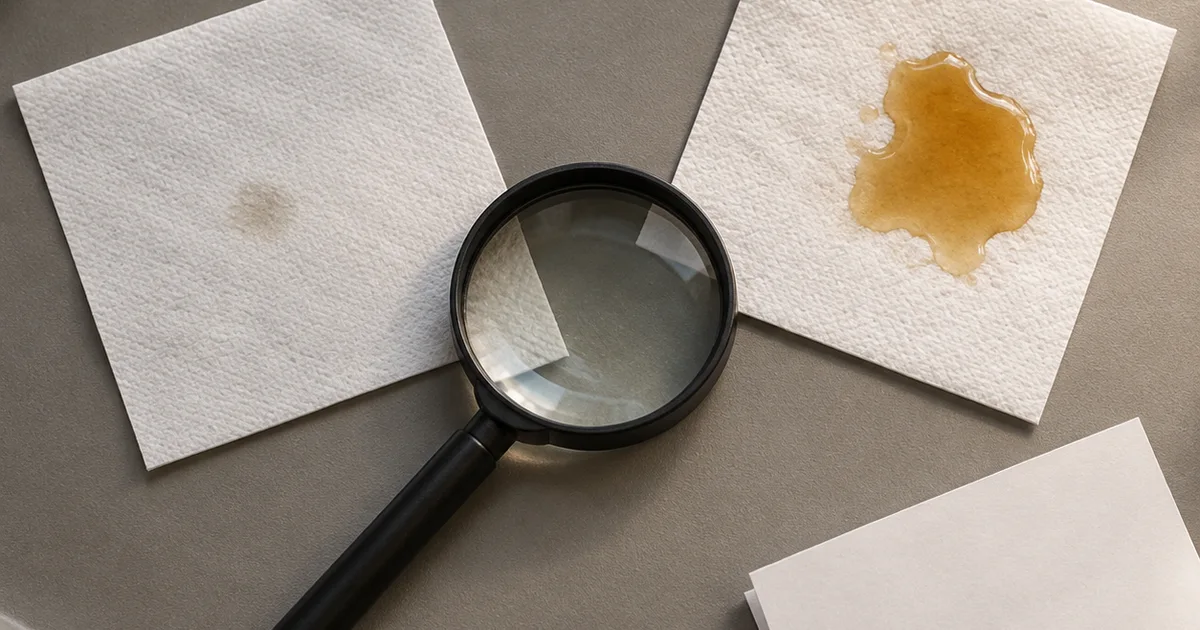
A vape leaking from the air hole needs a check of where the liquid is and whether it keeps returning. A thin film beneath a removable pod may be condensation. A puddle that reforms at the air inlet calls for a different response. Visible liquid at a charging socket moves the problem outside the pod-cleaning check: leave the device out of use and ask its manufacturer for handling instructions.
This guide is for adult users in the UAE. It explains a decision path, not a remote diagnosis or a repair procedure for every device. Instructions for your exact model take priority. Evidence and local product guidance checked on 10 October 2026; no hands-on testing was performed.
Is it condensation or a real leak?
A small film beneath a removable pod can be condensation; repeated pooling is a reason to pause rather than keep wiping and using it. Innokin’s leakage guide makes this distinction for pod systems. Its explanation does not establish that every damp contact or every device is harmless.
| What you can observe | Next action | Where that check ends |
|---|---|---|
| A light film beneath a removable pod | Pause use. Follow the manual for removal. Innokin describes removing a little pod-base condensation with a cotton swab; limit this to accessible surfaces the manual permits. | Increasing or recurrent liquid moves you to the next row. |
| Liquid repeatedly pools at the air inlet or pod base | Leave it out of use. Check the exact model manual for permitted fill-plug, seal, pod or coil checks. | Only inspect user-serviceable parts. Repeated leakage after the permitted check needs support. |
| Liquid at the charging socket, or a battery known to be wet or damaged | Leave the device out of use and do not connect a charger while requesting manufacturer handling instructions. | This is a conservative support boundary, not proof that socket liquid reached the battery. Battery handling is separate from pod cleaning. |
The table is a conservative handling boundary, not a test that certifies a device fit for use. When you cannot tell whether liquid has reached electrical parts, seek support before using it again.
Where is the liquid appearing?
The air inlet, pod base and mouthpiece point to different tasks, even when they are all described as a “leak.” Note the location rather than assuming that the visible opening is the part that failed.
Liquid leaving a mouthpiece with wet popping or gurgling belongs to the spitback and gurgling checks. Recurrent liquid outside an air inlet belongs to this guide. A wet charging socket takes you to the support boundary rather than a pod check. These symptoms can coexist; resolving one does not resolve the others.
For support, record the model name, which opening is wet, whether the problem began after filling or changing a pod, and whether liquid returns while the device is resting. Describe what you see. A useful report is “liquid reforms under the removable pod after wiping,” rather than “the battery is leaking” when you have not established that.
What should you do before checking a pod?
Check the manual before removing a pod: the cleaning method described for one device may not apply to yours.
Innokin’s example concerns a little condensation under the base of a removable pod. It describes using a cotton swab, not rinsing or drying the inside of a battery section. Follow your model’s permitted removal and cleaning method; internal cleaning is outside this guide.
Keep the model’s instructions nearby. Similar-looking devices may have different fill ports and different serviceable parts. An accessible pod is not an invitation to open the device beneath it.
Which parts can you inspect?
You can inspect only the parts that the exact model’s manual identifies as user-serviceable. Some systems have replaceable pods, coils or seals; others do not.
Innokin’s leakage guide discusses rubber gaskets and correctly aligned components in the section about refillable tanks. Those checks concern tanks with serviceable parts. They are not instructions to dismantle an unrelated sealed pod or tighten every component harder.
For a refillable pod, check its fill plug and visible condition only as directed. For a tank with a user-replaceable coil, check compatibility and seating using its instructions. A torn seal, cracked pod or part that no longer sits correctly is a support or correct-replacement-part question. Tape, glue and forced fitting are not substitutes for the specified part.
Why might a refillable pod leak?
A leak may reflect liquid entering an airflow path, a filling mistake or a problem with a serviceable component; the visible wet air hole alone does not identify which one. Start with what changed immediately before the symptom appeared.
After a refill, compare your actions with the manual: the correct fill opening, the stated fill limit and the closure of the plug. After changing a pod or coil, verify that it is the part specified for that device and that it seats as instructed. If the same symptom began without either change, note that for support instead of repeatedly refilling or reseating parts.
Innokin explains that forceful inhalation can flood the coil in some pod systems. That is one possible mechanism, not proof that the user caused a leak. Understanding the device’s airflow path can help distinguish an inlet from a fill opening, but it does not replace model-specific instructions.
Avoid changing liquid formulation, draw force and components together as an improvised experiment. It obscures what changed and may leave the original defect unresolved. Report recurrent leakage and use the manufacturer’s defined checks.
When should you stop using the device?
Leave the device out of use when liquid appears at its charging socket or a battery is known to be wet or damaged. The FDA’s battery-handling guidance says to replace batteries that get damaged or wet and to follow device instructions. That statement concerns batteries; it does not establish what caused liquid at a socket. This guide therefore sends socket-liquid observations to manufacturer support and keeps charging outside that unresolved check. It supplies no battery-replacement procedure and treats FDA as a handling reference, not UAE law.
Also stop routine troubleshooting when liquid repeatedly returns after the checks your manual permits. A replacement consumable does not establish that the battery section is undamaged. Ask the manufacturer or retailer how to handle the device and what evidence they need before returning it.
Use UAE Vape’s contact page to request the appropriate support route for an item bought from this site. Include the model, order reference and a description of the external symptom. A contact route is not a return approval or a promise of replacement; wait for the receiving party’s instructions.
What changes when the device is sealed?
A sealed device removes the user-serviceable route unless its manufacturer expressly provides one. Do not apply removable-coil or refillable-tank instructions to it.
Describe the external symptom, keep the device out of use and contact the retailer or manufacturer. Opening a sealed casing, accessing its battery or attempting to refill it falls outside this troubleshooting path. A charging socket, if present, does not mean the reservoir is refillable or the battery compartment is serviceable.
This distinction matters more than the label “disposable.” Use the actual model instructions to establish what can be removed or replaced. If the instructions are missing or unclear, support is the next step.
What does UAE product guidance add?
UAE product guidance establishes a regulatory context; it does not diagnose a leak or certify a particular device from its appearance. The Ministry of Industry and Advanced Technology describes UAE.S 5030 as a mandatory standard for electronic nicotine products.
When obtaining a replacement, ask for the exact model’s instructions and relevant product documentation. This article makes no item-specific claim that a device, seller or repair is approved or compliant. A standards reference on a general information page is not evidence of a particular product’s certification.
References
- U.S. Food and Drug Administration, Tips to Help Avoid Vape Battery Fires or Explosions, checked 10 October 2026. Linked in the stop-use section; used for battery handling, not UAE legal requirements.
- Innokin, Why Is My Vape Leaking? Manufacturer explanation of pod condensation, tank gaskets and leakage mechanisms; checked 10 October 2026. Linked in the condensation section.
- UAE Ministry of Industry and Advanced Technology, UAE Mandatory Regulation for Electronic Nicotine Products, published 18 October 2021; checked 10 October 2026. Linked in the UAE product-guidance section.