


Can You Recharge a Disposable Vape? Safe Charging Rules for UAE Heat

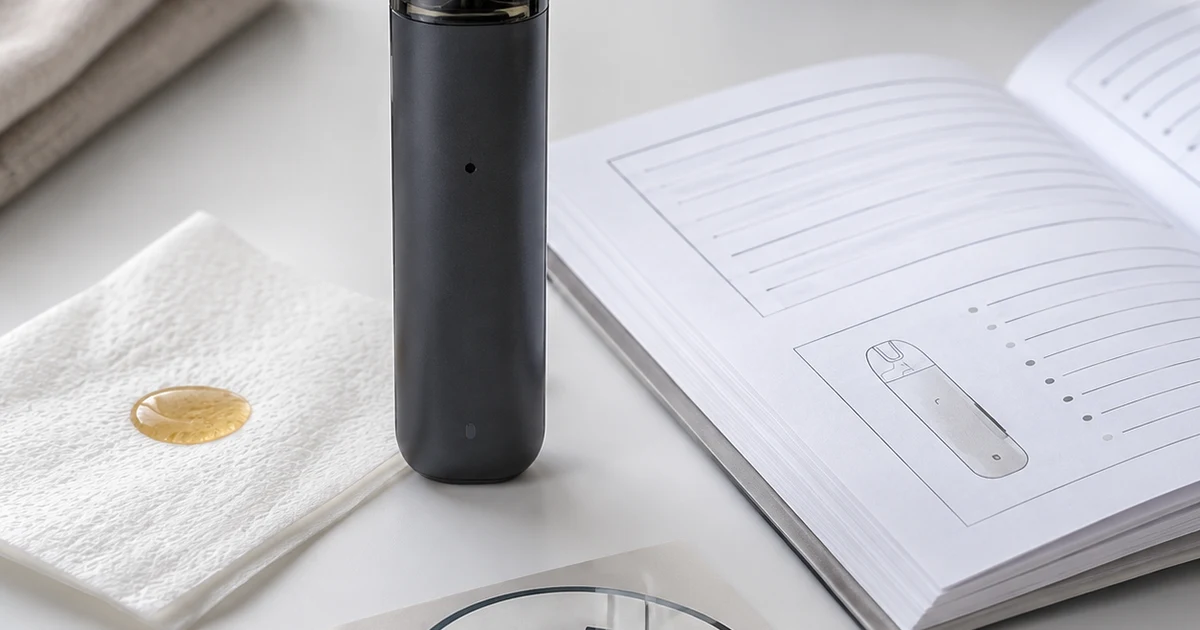
Can You Recharge a Disposable Vape? Safe Charging Rules for UAE Heat
It depends on the device — and in the UAE, also on the temperature. A disposable vape can be recharged only if the manufacturer built in a charging port and labelled the device as rechargeable; the large-puff models sold locally, such as the ELFBAR BC 10000, are built that way. A disposable without a charging port is not designed to be recharged at all. And once the surrounding temperature climbs past 40°C — a normal summer afternoon here — the safe move is to wait before plugging anything in.
Written for adult vapers (18+), this guide covers the quick check, safe charging conditions, what UAE heat changes, and when to retire a device instead.
Quick answer
Three rules answer most of it:
- If it has a charging port and is marked rechargeable, you can charge it — under the conditions below.
- If it has no charging port, it was never designed to recharge. Do not try.
- If the room or the device is hotter than 40°C, do not charge anything yet.
The table turns that into a decision you can make in a few seconds:
| What you see | What it means | What to do |
|---|---|---|
| A USB-C or micro-USB port, with “rechargeable” and an mAh rating on the packaging | Factory-rechargeable disposable | Charge it under the conditions below |
| No charging port anywhere on the body | Single-battery design, not built to recharge | Use it until it runs out, then recycle it — do not attempt to charge it |
| A port, but no rechargeable marking and no documentation | Capability unconfirmed | Check the packaging or manufacturer’s information before plugging in |
| Swelling, leaking, discolouration, heat, or odd sounds | The battery may be unsafe | Do not charge or use it; take it to a battery recycling point |
Check your device first
Disposables that can be recharged make the check easy. Look for three things:
- A port — usually USB-C or micro-USB, often on the bottom of the device under a small silicone plug.
- The word “rechargeable” on the packaging, along with a battery capacity in mAh.
- Manufacturer instructions that describe charging, whether a leaflet in the box or a page on the brand’s site.
The ELFBAR BC 10000 sold here is a clear example: its product page lists a 620 mAh rechargeable battery with Type-C charging, plus an 18 ml capacity, an estimated 10,000 puffs, and battery and e-liquid level displays.
Not every listing is that explicit. Some models in the store, such as the SIKARY GO 35000 and the INGOT 9000, do not state charging specifications on their product pages. That is not evidence either way: go by what the device body and packaging show, and until a port and a rechargeable marking are confirmed, hold off and check with the retailer or manufacturer.
If you are not sure what you are looking at, it helps to understand how a disposable vape works first.
Which disposables can be recharged
Two designs are on the market, and the difference decides everything:
- Rechargeable disposables — larger devices, usually high puff counts, a USB-C or micro-USB port, and a stated battery capacity. The port exists because the battery holds more charge than the e-liquid needs: when it drains before the tank is empty, charging lets you finish the e-liquid that was sold with the device.
- Sealed, non-rechargeable disposables — the older, smaller format. The battery is sized to exhaust itself roughly when the e-liquid does, and there is no port because none was intended.
Advice written for the older format still says most disposables cannot be recharged — exactly the mismatch you meet when a new device arrives with a Type-C port. Both answers can be right; it depends on the device in your hand.
One line is absolute. Never disassemble, modify, or try to wire charging into a device that has no port. The U.S. Fire Administration (USFA) warns that damaged lithium-ion batteries can cause fires, and FDNY Smart tells users to follow the manufacturer’s instructions and to use the manufacturer’s cable with its dedicated power adapter.
The wider rules for every lithium-ion vape battery — charging, storage, handling — are in the site’s battery safety guide for UAE vapers.
Safe charging steps
For a device that passes the check above, charging is ordinary, with conditions borrowed from official fire-safety guidance:
- Follow the manufacturer’s instructions first: FDNY Smart’s core advice for lithium-ion devices is to charge and store them exactly as the manufacturer describes.
- Use the manufacturer’s cable and its dedicated power adapter, and look for certified products carrying a safety mark such as UL when buying devices or chargers.
- Charge at room temperature, on a hard, dry surface — not in sunlight, not on a windowsill, not inside a parked car.
- Watch the indicators: the light or display shows progress and tells you when the battery is full. Charging time varies by model and by how empty the battery is, so treat any minute count as a rough range.
- Stop if anything changes. Smell, heat, discolouration, swelling, leaking, or unusual sounds mean you unplug and stop using the device, however new it is.
If the question is the reverse — a rechargeable device that will not charge — that is a fault to diagnose, not a reason to improvise; the troubleshooting guide for vapes that will not charge walks through it.
Whether you can keep vaping while plugged in is a separate question, covered in the guide to vaping while charging.
Charging in UAE heat
The temperature rule deserves its own section, because the gap between official guidance and Gulf weather is wide. The USFA advises against charging lithium-ion batteries below 0°C or above 40°C (outside 32–105°F). Summer afternoons in the UAE regularly push outdoor temperatures past 40°C, and a parked car goes well beyond that. Charging here is mostly an indoor, air-conditioned-room activity.
A short checklist before you plug in:
- The room is at normal indoor temperature. If the device has been outside or in a car, let it cool back to room temperature first — it sits above the charging window until it does.
- The device and cable sit out of direct sunlight, away from windowsills and dashboards.
- Nothing about the device feels hot to the touch; noticeable heat while plugged in is a stop signal, not a quirk.
- The same rules apply to storage: the USFA advises keeping lithium-ion batteries at room temperature, away from hot cars and direct sunlight.
None of this is unique to vapes — it is the same window the USFA gives lithium-ion batteries in general — but it is the part that matters most in a UAE summer.
Signs to stop using
The USFA’s warning signs for lithium-ion batteries apply directly to vapes. Stop charging and stop using the device if you notice any of these:
- An odd or chemical smell
- A change in colour anywhere on the device
- Noticeable heat during use or charging
- Deformation — any swelling or bulging of the casing
- Leaking liquid
- Hissing, popping, or other unusual sounds
Any one is enough. Do not open the device to investigate or try to repair it; NFPA’s guidance for damaged batteries is to stop using the product and contact the manufacturer. A finished device does not belong in household waste — the USFA recommends a local battery recycling point instead.
FAQ
How do I know if my disposable vape pen can be recharged?
Look for the port and the rechargeable marking, then confirm against the packaging or manufacturer’s information — the triage table above covers the combinations. If nothing confirms it, do not guess: ask the retailer or check the manufacturer’s site before plugging in.
Can I charge a disposable vape in the UAE summer?
Indoors, at normal room temperature, a device built to recharge charges as usual. The 40°C ceiling is the constraint: skip charging during the hottest part of the day, never leave a device in a parked car or direct sunlight, and let a hot device cool before plugging in.
How long does a disposable vape take to charge?
It depends on the model and how empty the battery is. Retailer guides commonly quote roughly 30 minutes to 2 hours for port-equipped devices, but the reliable signal is the device itself — its indicator light or display — and the manual may state what to expect for that model.
What happens if I never charge a disposable vape?
Nothing dramatic — the design simply runs out. A non-rechargeable disposable carries one battery’s worth of charge, so its life ends when that is spent; the right response is to recycle it, not to look for a workaround. A rechargeable model left unplugged stops working once its charge is used up, and the same disposal rules apply.
References
- U.S. Fire Administration — Battery Fire Safety (charging temperature window, heat and storage advice, stop-use signs, disposal)
- FDNY Smart — Safety Tips for Lithium-Ion Batteries (manufacturer instructions, cables and adapters, certified products)
- NFPA — Lithium-Ion Battery Safety (damaged-device handling)
- Exclusive Brands — Read Before Recharging Your Disposable Vape Pen (port and no-port distinction, charging time range)
- ELFBAR BC 10000 product page, uaevape.store (first-party listing: 620 mAh rechargeable battery, Type-C charging)