


Can You Carry a Vape on a Flight from Dubai to India? Rules at Departure and Arrival

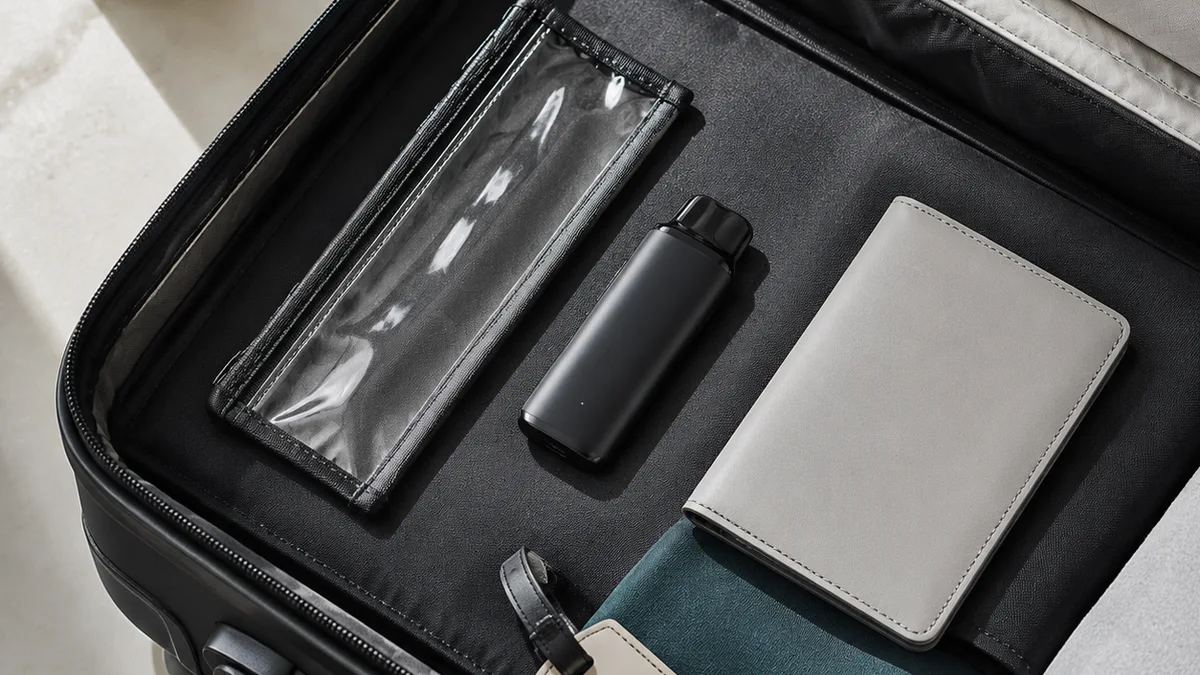
Can You Carry a Vape from Dubai to India? India’s Ban Explained
Many UAE residents pack for the flight home with exactly this question. The statute-based answer has two halves. On departure, an adult vaper can usually travel through Dubai with a device under airline rules and UAE aviation screening. On arrival, the picture is unambiguous: India’s Prohibition of Electronic Cigarettes Act, 2019 (PECA) prohibits the import and transport of e-cigarettes with no personal-use exemption. Carrying the device into India risks confiscation and criminal penalties. The safest decision is to leave it behind.
Quick answer: two legs, two laws
The law splits the journey in two: what Dubai permits when you board, and what India prohibits when you land. Carrying a vape on a flight from Dubai to India is only half-decided at the departure gate — the half that matters most belongs to Indian law.
| Dubai departure leg (UAE side) | India arrival leg (Indian side) | |
|---|---|---|
| Governing rules | Airline dangerous-goods rules and UAE aviation security screening | PECA 2019 (Act No. 42 of 2019), the DGFT import ban and CBIC customs enforcement |
| Device allowed? | Generally yes, in carry-on baggage under battery rules, at the airline’s discretion | No — the Act prohibits importing or transporting e-cigarettes into India, “whether as a complete product or any part thereof”, with no personal-use exemption |
| Official powers | Screening can refuse items that breach battery or liquids rules | Search and seizure without warrant under Section 6; customs instructed to enforce the import ban strictly |
| If found | The item is refused or removed at the checkpoint | Seizure; Section 7 penalties — up to one year and/or ₹1 lakh for a first offence; disposal under Section 10 |
| Decision | Boarding is usually possible under carrier rules | Do not carry it into India — leave it behind |
The Dubai departure leg
Airlines flying out of Dubai publish their own dangerous-goods rules, and e-cigarettes are generally accepted in carry-on baggage under lithium-battery rules. Security screening at DXB treats the device like other battery-powered electronics. Our guide to taking a vape on a plane from the UAE covers the departure-side framework, and the rules for vaping inside Dubai Airport cover the waiting hours before your gate.
Two limits matter. Airline acceptance is expressly subject to the customs and security rules of both countries — an airline’s ok does not override Indian law. Carrier policies change, so confirm with your airline before you fly.
The India arrival leg
Three official instruments define the arrival leg:
- PECA 2019 — the Prohibition of Electronic Cigarettes (Production, Manufacture, Import, Export, Transport, Sale, Distribution, Storage and Advertisement) Act, 2019 (Act No. 42 of 2019), deemed in force on 18 September 2019.
- The DGFT import prohibition — Notification No. 20/2015-2020, dated 26 September 2019, placed e-cigarettes and their components under ITC-HS 8543 as “Prohibited”.
- CBIC Circular No. 35/2019-Customs (1 October 2019) instructed jurisdictional customs officers to strictly implement the import ban (see CBIC).
For a traveller: carrier rules let the device board in Dubai; on landing it is an item whose import and transport into India the Act prohibits; detection can lead to seizure and Section 7 penalties; the only risk-free decision is not to carry the device, its pods or its parts.
What the law says (PECA 2019)
The statute is more precise than the usual one-line summary, and that precision is what a traveller needs. The points below come from the official Gazette text of Act No. 42 of 2019, via the India Code entry and cross-checked on Tobacco Control Laws.
Section 3(d): what counts as an “electronic cigarette”
The definition covers any electronic device that heats a substance to create an aerosol for inhalation, with or without nicotine and flavours, and includes “all forms of Electronic Nicotine Delivery Systems, Heat Not Burn Products, e-Hookah and the like devices, by whatever name called and whatever shape, size or form it may have”. The only carve-out is for products licensed under the Drugs and Cosmetics Act, 1940. The ban covers the device, the pods and the parts across every known format.
Section 4: the prohibition that covers your device
On and from commencement, “no person shall, directly or indirectly, — (i) produce or manufacture or import or export or transport or sell or distribute electronic cigarettes, whether as a complete product or any part thereof”. For a passenger, two phrases matter: “import” and “transport” are not trade-only words — a device in your baggage is an import into India — and “any part thereof” closes the assembly argument, covering device and pods separately. There is no personal-use or passenger exemption.
Section 5: storage
The Act also bans knowingly permitting a place you own or control to be used for storage of a stock of e-cigarettes — aimed at premises and stockists, but part of the same wall.
Section 6: search and seizure without warrant
An authorised officer — police not below sub-inspector rank, or an equivalent government-authorised officer — with reason to believe the Act is being contravened may enter, search and seize connected records or property, under the Code of Criminal Procedure, 1973.
Section 7: penalties
Whoever contravenes Section 4 “shall be punishable with imprisonment for a term which may extend to one year or with fine which may extend to one lakh rupees, or with both”, and for a second or subsequent offence “with imprisonment for a term which may extend to three years and with fine which may extend to five lakh rupees” (Section 7 via Indian Kanoon). A first offence is a criminal offence on the statute book, not a warning at the counter; whether prosecution follows is decided by the authorities.
Section 10: disposal of seized stock
Once court proceedings are complete and the seized items are proved to be stocks of electronic cigarettes, they are disposed of under Chapter XXXIV of the Code of Criminal Procedure, 1973 — a court process, not a routine hand-back.
What happens at the airport
The ban has been enforced at Indian ports since September 2019, when the government announced the nationwide prohibition (BBC News). CBIC’s circular puts the enforcement duty on customs officers at each port, and the DGFT listing keeps e-cigarettes out of lawful import channels. Devices found in baggage can be seized, and the person carrying them can face the process in Sections 6 and 7.
No article can predict case-by-case outcomes — how a port screens, whether a bag is opened, how officers handle a first-time traveller. That uncertainty cuts one way: carrying the device is a gamble, not a plan.
As of the August 2026 check for this article, no amendment, repeal or personal-use exemption had been published, and independent trackers still classify India as banned (GSTHR). If the law changes, this page will be updated.
What to do instead
- Leave the device in the UAE — at home, or with whoever is looking after things. It is the only option with no legal exposure on arrival.
- If the device has reached end of life, dispose of it responsibly in the UAE before departure, through your emirate’s battery and e-waste channels.
- If you need nicotine during the trip, plan around legal products. The Act’s definition excludes products licensed under the Drugs and Cosmetics Act, 1940 — the category regulated nicotine replacement therapy sits in. That is the statute’s scope, not packing advice; verify current Indian rules before relying on any product.
If your question is really about the departure country, the complete guide to UAE vaping laws in 2026 is the broader reference. The two route questions stay separate: UAE law governs the start of the trip, Indian law the end.
FAQ
Will Indian customs confiscate my vape?
They can. Section 6 provides for search and seizure without warrant, and customs has been instructed to enforce the import ban strictly. Whether a particular device is detected at a particular port is not something anyone can promise; the legal basis for confiscation is not in doubt.
What is the penalty for carrying a vape into India?
Section 7 prescribes, for a first contravention of Section 4, imprisonment up to one year, or a fine up to one lakh rupees (₹1,00,000), or both; for a second or subsequent offence, up to three years and a fine up to five lakh rupees. Prosecution in an individual case is a matter for the authorities.
Can I pack my vape in checked luggage instead?
No. Section 4 covers importing and transporting e-cigarettes “whether as a complete product or any part thereof” and does not distinguish hand baggage from hold baggage — a checked bag arrives in India just as a cabin bag does.
What if I am only transiting through India?
The Act contains no transit exemption. If your connection involves clearing customs or re-checking baggage in India, the device is on Indian soil and the prohibition applies as to any other arrival. The conservative decision is the same: do not carry it.
References
- India Code — Prohibition of Electronic Cigarettes Act, 2019 (No. 42 of 2019), official statute entry. indiacode.nic.in
- Gazette of India Extraordinary — official Gazette text (Sections 1(2), 3(d), 4–7, 10), archived official copy. tobaccocontrollaws.org
- Indian Kanoon — Section 7, PECA 2019. indiankanoon.org
- CBIC — Circular No. 35/2019-Customs (1 October 2019). cbic-gst.gov.in
- Tobacco Control Laws (Johns Hopkins) — India: e-cigarettes. tobaccocontrollaws.org
- Global State of Tobacco Harm Reduction — India: e-cigarette regulatory status, 2026. gsthr.org
- BBC News — India bans e-cigarettes (September 2019). bbc.com